The Manager Bottleneck Is Your Hidden Throughput Constraint
The Manager Bottleneck Is Your Hidden Throughput Constraint
The quiet constraint no dashboard shows
Most organizations don’t have a “manager problem.” They have a bandwidth problem that looks like a manager problem.
You see it in the symptoms: decisions that should take hours take weeks, priorities that should feel obvious become debate, and escalation paths become murky. Projects don’t fail dramatically—they slow down. And when everything slows, leaders add more check-ins, more reporting, more meetings… which consumes the same scarce resource they’re trying to protect.
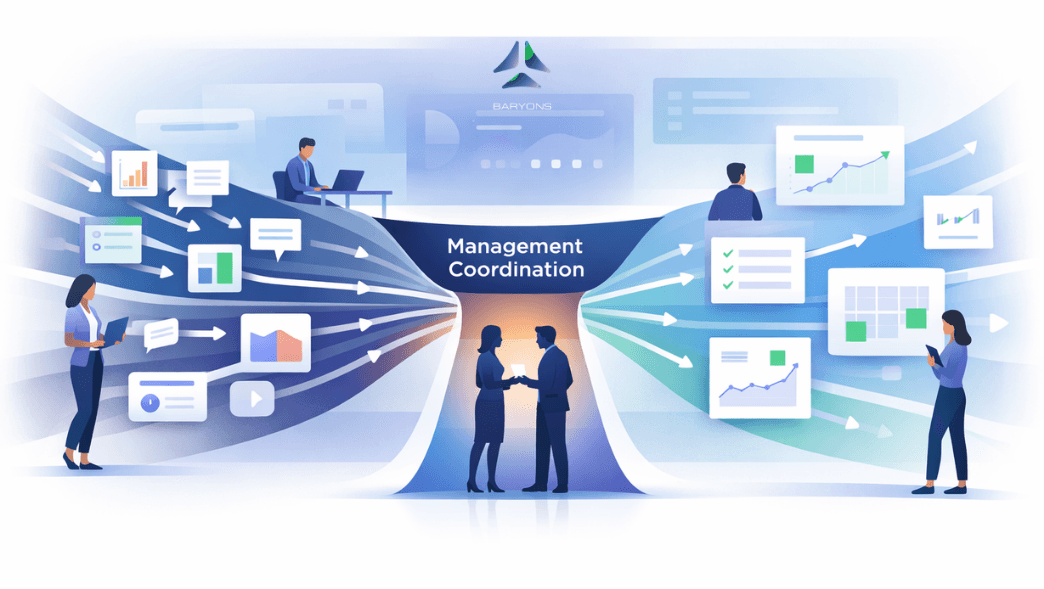
Managers are the coordination layer of the business. When that layer saturates, the entire system behaves like a factory with a jammed conveyor belt: work piles up everywhere, even though everyone is “busy.”
Why manager load compounds (even when headcount grows)
The common intuition is that more people should mean more capacity. In practice, scale increases interdependence. Interdependence increases coordination. Coordination increases manager touchpoints. And suddenly the manager’s day becomes the system’s limiting reagent.
A few forces make this worse:
Ambiguity requires interpretation. When priorities shift, people need translation—not just direction. That translation typically lands on managers.
Cross-functional work increases exception handling. The more teams collaborate, the more edge cases appear. Edge cases route upward.
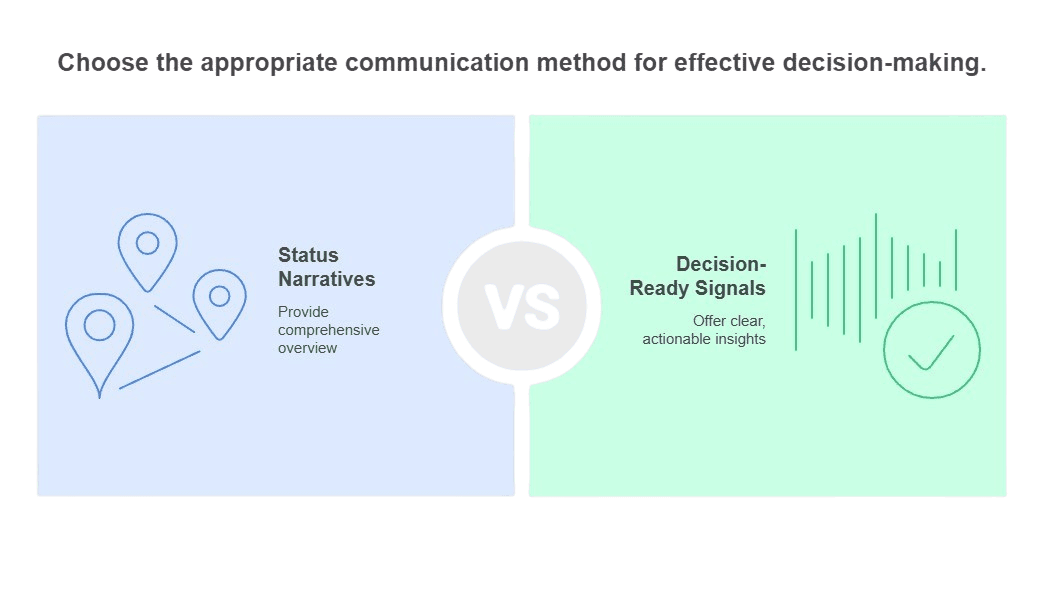
Status narratives replace signal. When leaders can’t “see” reality continuously, they ask managers to produce it. That’s expensive, slow, and often biased toward what feels defensible.
Managerial time fragments faster than IC time. An engineer can protect a three-hour focus block. A manager is lucky to protect 15 minutes.
This is why leaders feel like they’re managing a permanent queue. It’s not incompetence. It’s system design.
The bottleneck isn’t effort. It’s decision clarity.
Baryons frames alignment as connection—not activity. In practice, alignment shows up as shared clarity on what matters, collective momentum, and trust that voices shape the path forward. When that clarity is absent, managers become the “API” everyone calls to resolve confusion.
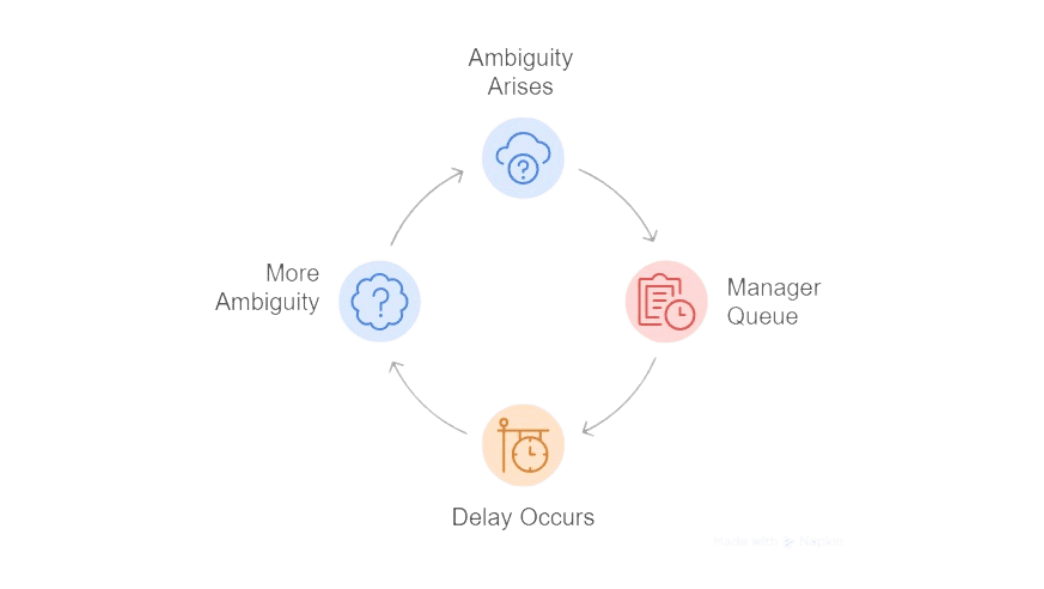
The result is a self-reinforcing loop:
Ambiguity increases manager questions → manager availability decreases → answers come later → uncertainty spreads → more questions arise.
Once you’re in that loop, no amount of “working harder” fixes it. You have to change the information flow.
What high-performing organizations do differently
The best organizations don’t eliminate management. They make management lighter by making reality more visible and decisions more distributable.
They do a few things consistently:
They reduce escalations by clarifying decision boundaries.
Not “who owns the work,” but “who owns this kind of decision under these conditions.”
They create lightweight reflection rituals.
Not therapy. Not more meetings. Brief moments that turn friction into learning before it becomes failure.
They treat human experience as an execution indicator.
If clarity is collapsing or strain is rising, delivery risk is already present—just not yet visible in lagging KPIs.
They instrument the system for early signal.
They stop relying on anecdotes and retroactive reporting to understand how work is going.
That last point matters most. If you can’t see weak signals early, managers become your sensing mechanism. And sensing is not their only job.
A practical reset: four moves that reduce manager load without reducing standards
Here’s a simple, operator-friendly approach you can run over the next month:
Make “what matters most” explicit—and stable for a week.
When priorities change daily, managers become translators all day. Create a weekly “priority lock” unless something truly breaks.
Turn recurring friction into a named pattern.
Most organizations relive the same three coordination failures repeatedly. Name them. Track them. Shrink them.
Replace status writing with structured reflection.
Status reports are often performance theater. Reflection—done well—produces signal: what changed, what’s blocked, what’s unclear, what decision is needed.
Create a leader snapshot that doesn’t depend on manager narration.
When leaders receive decision-ready insight continuously, they intervene earlier and lighter—before emergencies force heavy intervention.
This is where tools matter. Not as another layer of work, but as infrastructure that reduces the coordination tax.
Where Baryons fits (without adding meetings)
Baryons was designed around a low-friction voice practice—brief calls that help individuals reflect, clarify, and move forward, with continuity over time. For teams and enterprises, it surfaces patterns of clarity, alignment, and strain without singling anyone out, so leaders can see where execution is slowing or where support is needed—before it becomes expensive.
That’s the key: managers shouldn’t have to be your only sensor. They should be your leverage.
If you’re curious what it looks like to reduce the manager bottleneck by making early signal visible—without adding more meetings—take a look at what Baryons offers and how teams are using brief calls to create big clarity.
Learn more at Baryons.com
More articles

Flourishing in Motion: What I Learned from Pavel Bosovik of 27 North
Pavel Bosovik went from selling glue bookmarks on food stamps to building expedition vehicles that help people disappear off-grid. On The New F Word, he shares why flourishing is a daily practice, not a destination, and why movement is medicine.

Data Without Trust & the Psychology of Signal
Modern organizations are over-instrumented and under-informed: dashboards and surveys everywhere, yet leaders still don’t trust what they’re seeing. This blog explains why signal collapses psychologically (not methodologically), how measurement turns into performance theater, and the design principles that create trustworthy, decision-ready signal teams will tell the truth into.

Flourishing as Performance Infrastructure
Flourishing isn’t a perk or a wellness program, it’s performance infrastructure. This blog reframes flourishing as the operating conditions that make execution durable under pressure: clarity, confidence, and curiosity. It explains why ambiguity (not workload) breaks performance, how flourishing functions as an early warning system, and what it looks like when built into the operating system.