Flourishing as Performance Infrastructure

Flourishing is upstream
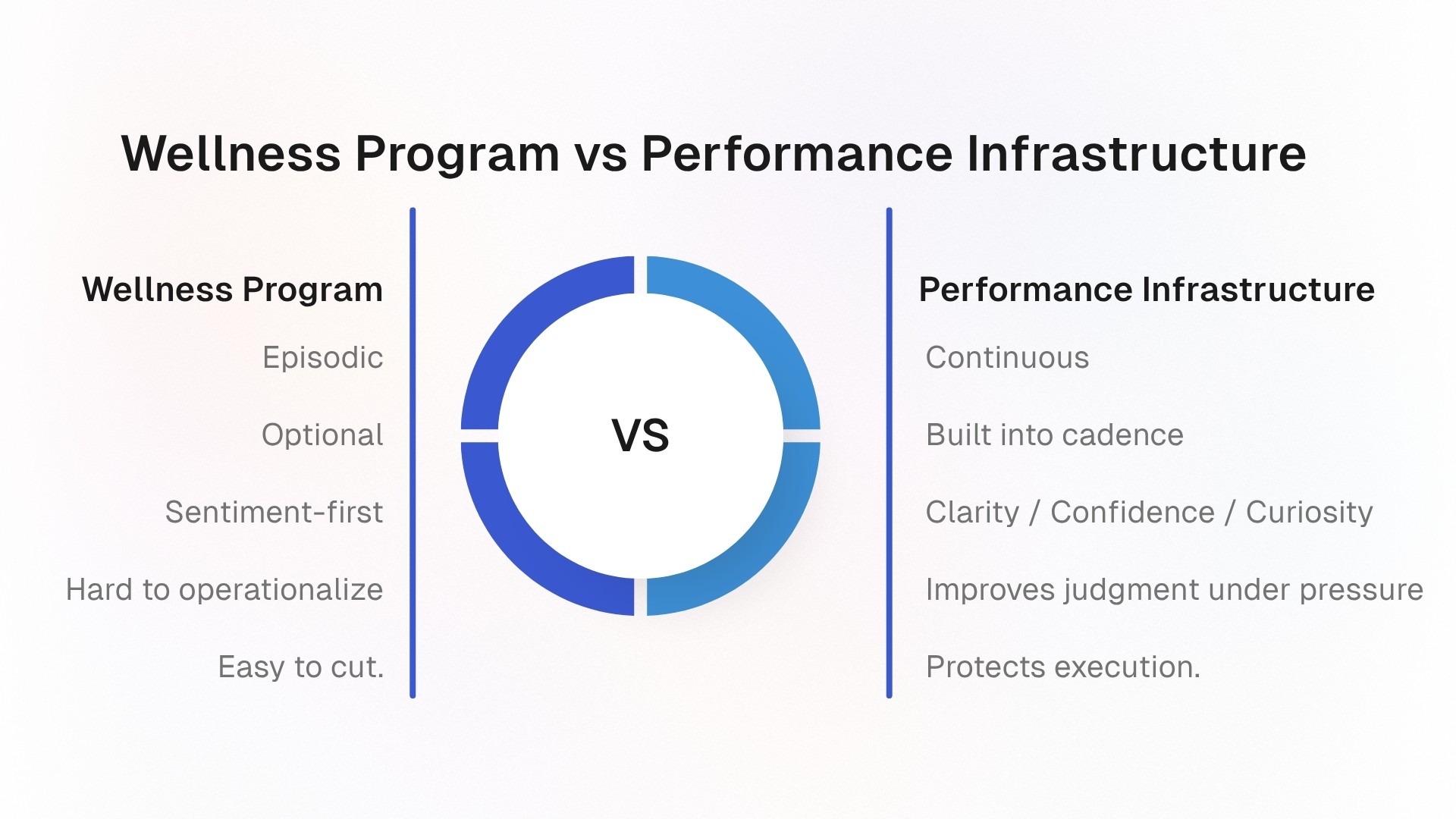
In many organizations, “wellbeing” lives in the same bucket as perks: nice to have, easily cut, hard to measure. That framing is outdated.
Flourishing, when defined as clarity, confidence, and curiosity is performance infrastructure. It determines whether your people can make good decisions under pressure, learn quickly, and sustain execution without breaking.
If you’re leading through AI-era compression, leaner teams, broader scopes, faster cycles; this isn’t philosophical, it’s operational. When fewer people carry more responsibility, the human performance layer becomes the constraint.
The executive misconception: flourishing is emotional comfort
What leaders often picture when they hear “flourishing” is emotional positivity.
But in high-performing environments, flourishing is better defined as:
Clarity: people know what matters, what changed, and what “good” looks like
Confidence: people can act without excessive permission loops or fear
Curiosity: people still explore, surface risk early, and learn instead of defend
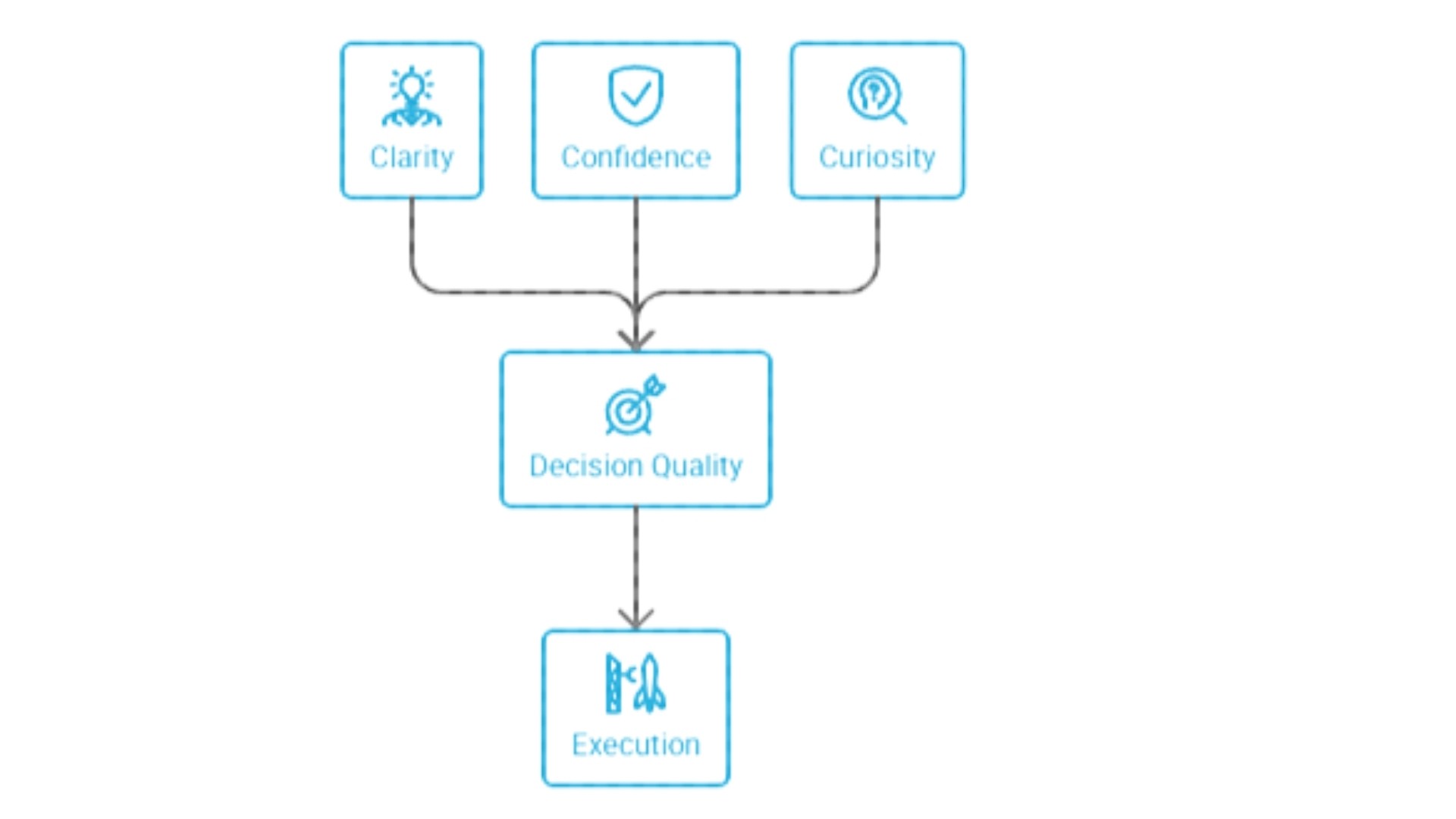
These are not sentimental outcomes. They are the conditions that make execution durable.
Why performance breaks: Ambiguity
Burnout rarely starts with long hours. It starts with prolonged ambiguity, people spending energy guessing what matters and bracing for reversals.
Ambiguity is a vigilance tax. It consumes cognitive capacity. It shortens horizons, reduces patience and collaboration. Eventually, it converts into quiet disengagement or attrition, which shows up as an expensive “talent problem” after the damage is done.
That’s why flourishing belongs in the same category as:
decision systems,
coordination mechanisms,
operational rhythms.
It’s how you keep execution coherent as conditions change.
The hidden connection: flourishing is an early warning system
Here’s the practical link executives care about:
When flourishing declines, signal quality declines.
People stop naming problems early
They stop raising constraints
They switch to performative updates
They protect themselves
The organization becomes “quiet” in the wrong way: fewer honest flags, fewer learning loops, more surprise costs.
Flourishing, done right, is not the absence of stress. It’s the presence of healthy strain—where people can stretch without snapping because clarity and trust stabilize the system.
What flourishing looks like in the operating system
If flourishing is infrastructure, leaders should be able to point to where it lives. In mechanics.
Clarity as a weekly maintenance ritual
Alignment decays naturally as orgs scale and priorities shift. So clarity can’t be declared. It has to be tuned.
A flourishing organization has predictable moments where people re-anchor:
What matters most right now
What changed since last week
Where we’re constrained
What decisions are needed
This isn’t “more meetings.” It’s fewer, sharper shared reality updates.
Confidence as decision boundaries
Confidence comes from reducing perceived risk.
People act with confidence when they know:
what they own,
what they influence,
what they escalate,
and what “good faith” looks like.
When decision boundaries are vague, people compensate with permission loops, politics, and hesitation. Confidence is operationally designed.
Curiosity as a leading indicator of organizational health
Curiosity is one of the first things fear kills. When curiosity disappears, it’s usually because:
people are punished for surfacing problems,
priorities whiplash without explanation,
measurement feels evaluative,
leaders ask for truth but reward optics.
The loss of curiosity is not a culture problem. It’s a signal that the system is becoming unsafe for learning.
The mechanism: reflection as a cheap performance upgrade
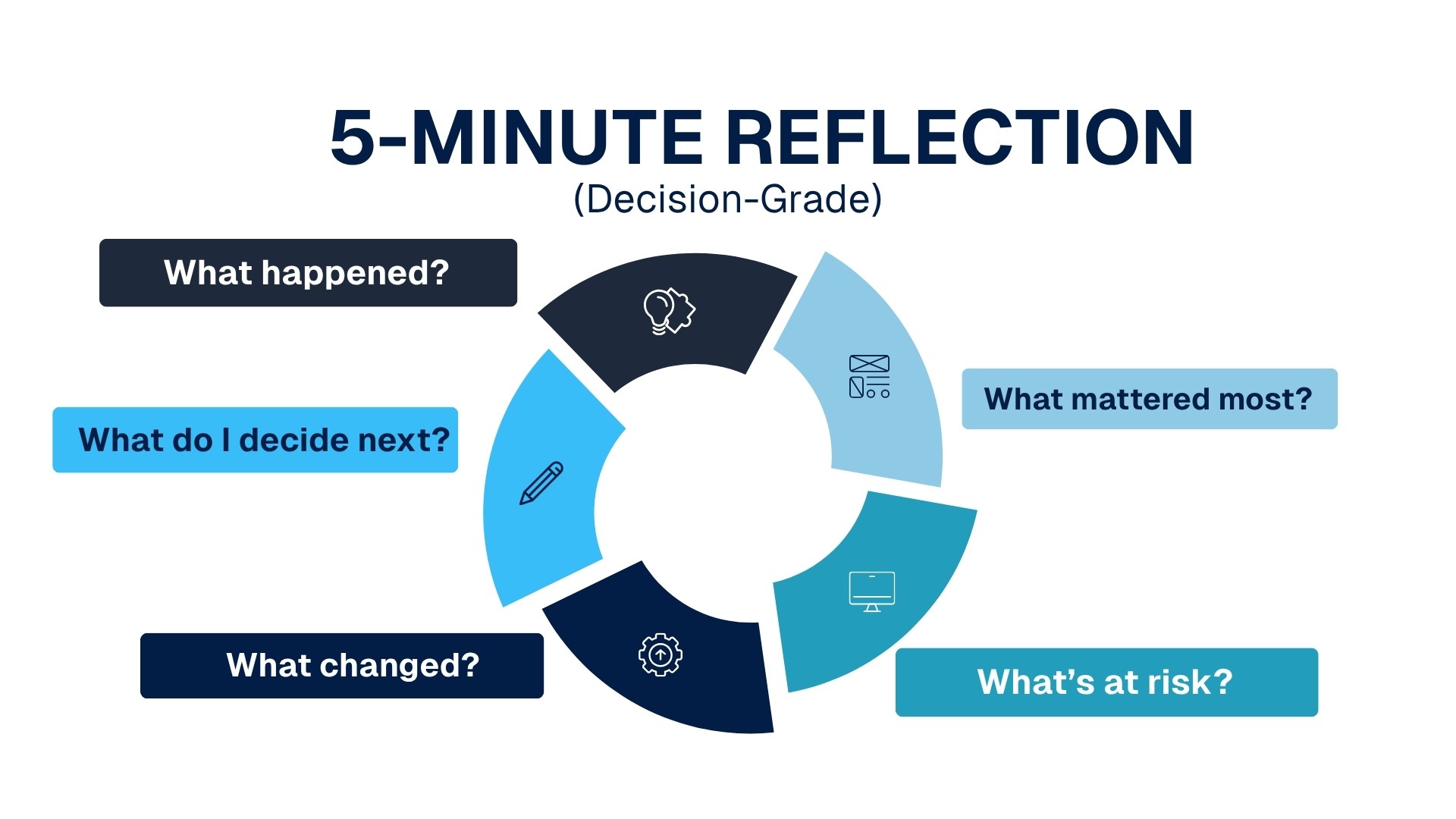
The highest-leverage flourishing practice is also the simplest: reflection.
Reflection as sensemaking:
What happened?
What mattered?
What’s at risk?
What do I need to decide next?
Reflection turns experience into judgment. Judgment turns pressure into learning instead of burnout.
This is why Baryons frames itself as Human Performance AI: a low-friction, voice-based daily practice that strengthens how people think before they decide and act, so execution holds under pressure.
Why this is especially urgent in the AI era
AI increases capability but it also increases speed. And speed punishes weak human systems.
As organizations deploy AI, the constraint shifts from technology to human decision quality and alignment. If people can’t interpret change together, commit quickly, and execute consistently, AI investment turns into fragmentation: more output, less coherence.
Flourishing is what keeps the human layer coherent:
clarity prevents thrash,
confidence prevents hesitation,
curiosity prevents hidden risk.
Closing
Flourishing is the infrastructure that determines whether performance compounds or collapses under pressure.
If your organization is asking people to do more with less, move faster, and make better decisions with imperfect information, you can’t treat flourishing as optional. You have to build it into the operating system.
Baryons is designed for exactly that: strengthening clarity, confidence, and curiosity daily—while giving leaders continuous, decision-ready signal about the human dynamics that drive execution.
More articles

Going Deeper: The Thinking Partner and the Growth Partner
Both the Thinking Partner and the Growth Partner grow you. The difference is shape. A look at when to reach for each, and why depth is where the magic lives.

Why This Isn’t a Pulse Survey
Baryons is not another employee pulse survey. This blog explains the difference between periodic listening and longitudinal organizational signal, showing how Baryons helps CHROs and People leaders understand what changes between survey moments: clarity, momentum, alignment, strain, and emerging patterns that may matter before they become obvious symptoms.
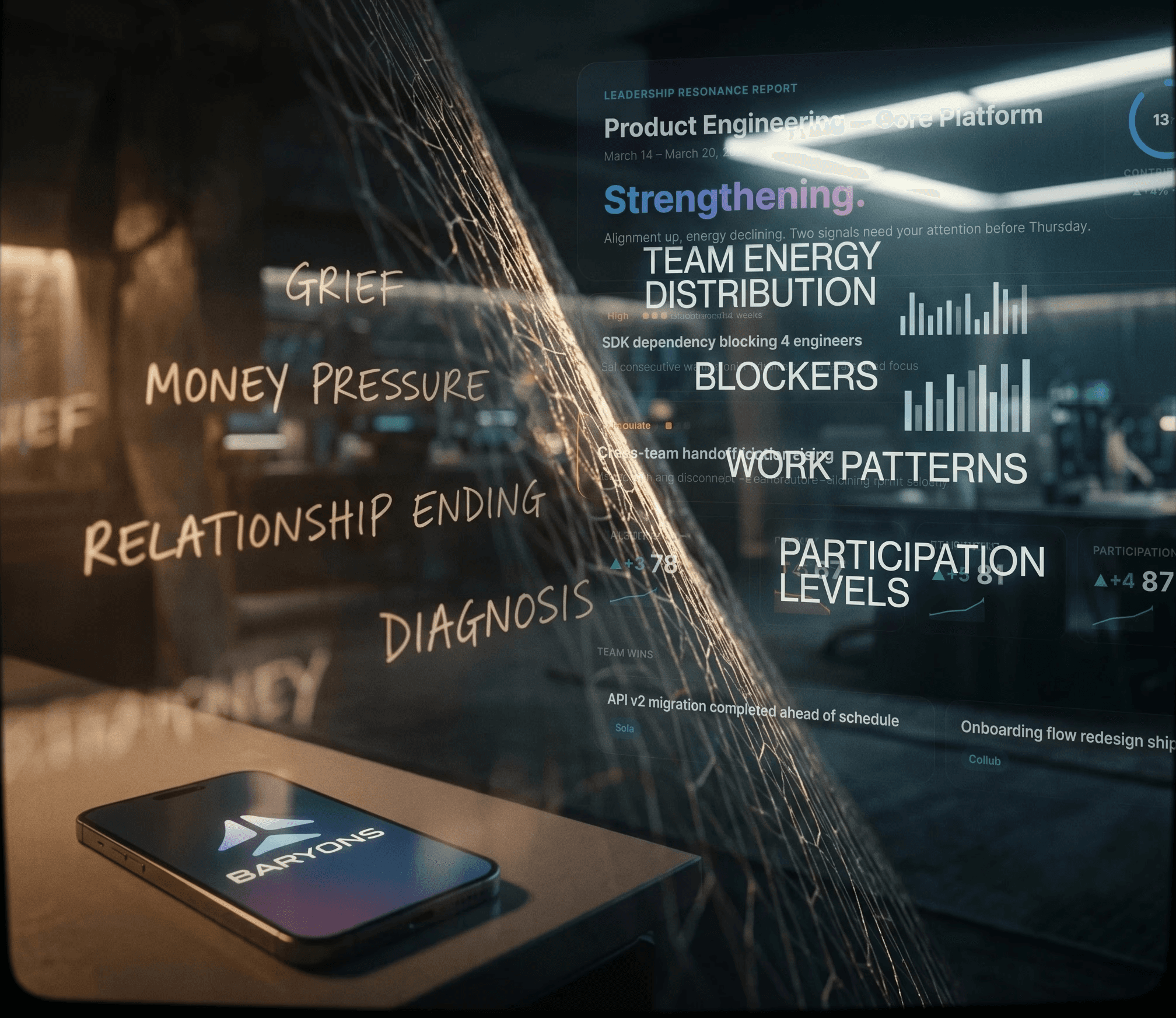
The Privacy Mesh
People tell their Baryon real things in an organizational context. The Privacy Mesh is how they can, while their leadership still sees a team's energy and never the contents of a life. Here is how that boundary actually holds.
