Drift Detection and Early Warning Signals

The problem is invisibility.
Most organizations don’t fail loudly. They fail quietly, through small misalignments that compound until a delivery miss, a regretted resignation, a safety incident, or a margin surprise makes the cost undeniable.
That’s why “drift detection” is an executive capability, not an HR initiative.
When leaders say, “We didn’t see it coming,” they usually mean: we didn’t have a continuous, trustworthy signal of how work was actually being experienced and coordinated. We had status narratives. We had dashboards. We had quarterly surveys. We had lagging indicators that looked clean right up until they didn’t.
Drift is what happens in the silent space between strategy and outcomes, when people can’t continuously make sense of what’s changing together. And the most dangerous thing about drift is that it doesn’t feel like a crisis at first. It feels like “a few off weeks.”
Why leaders intervene late
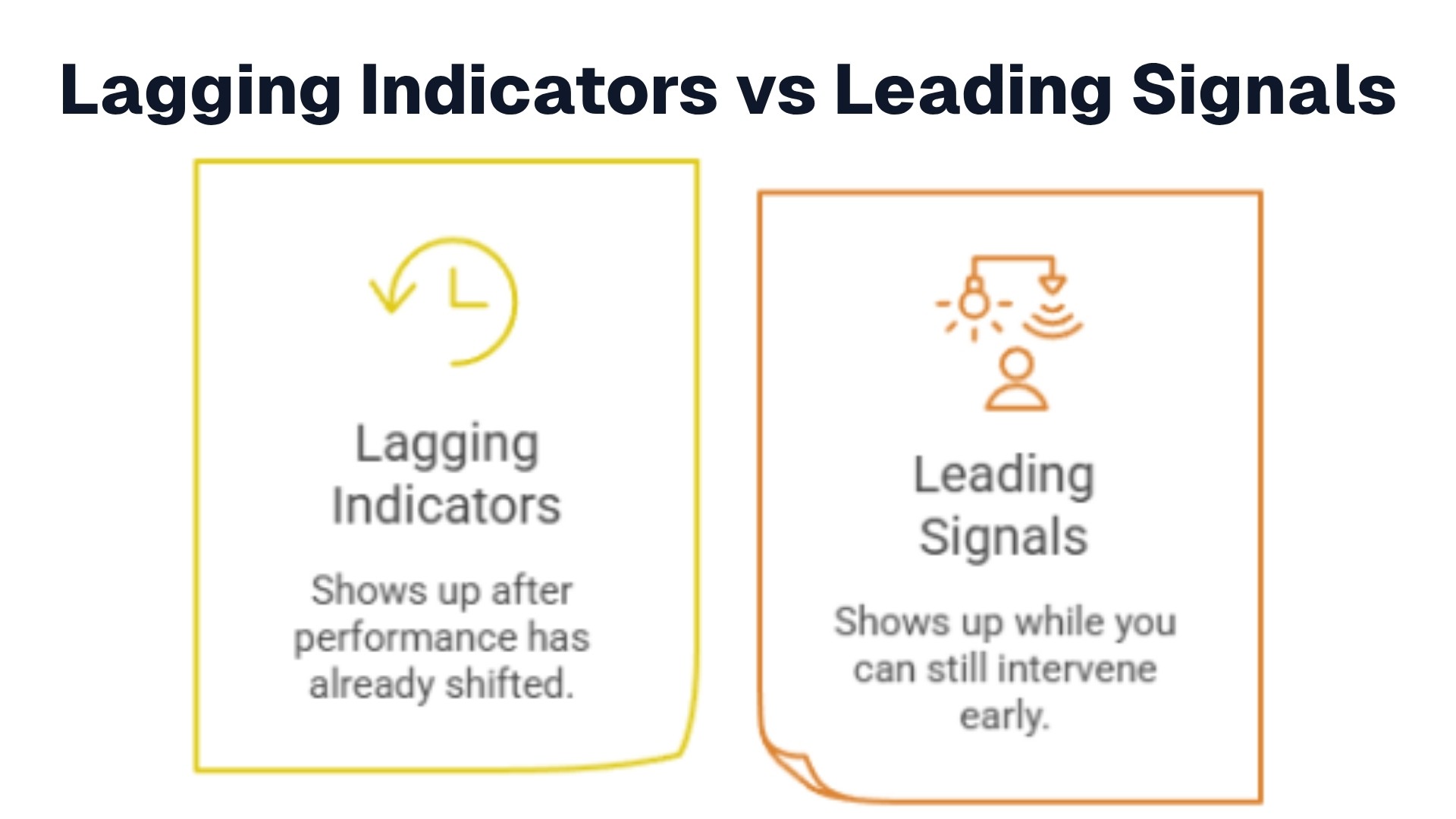
Intervention is rarely delayed because leaders don’t care. It’s delayed because signal is missing or untrusted.
In most operating systems, the “official” indicators arrive after the cost has already been paid:
Attrition shows up after belief breaks.
Customer escalation shows up after coordination fails.
Quality issues show up after rework loops have already eaten capacity.
Engagement scores show up after people stop telling the truth.
So leaders do what humans do when they lack signal: they rely on anecdotes, personality-driven reports, and their own pattern recognition. That can work when an organization is small. It breaks when the organization scales, distributes, or compresses around AI and leaner teams where weakness spreads faster and tolerance for error declines.
Drift is a meaning problem
Drift begins when different parts of the organization stop answering “what matters most right now?” the same way.
Not because anyone is incompetent, because strategy degrades through layers and handoffs. Because priorities shift faster than shared reality can update. Because hybrid work removed ambient signal. And because people protect themselves when clarity is low: they default to local optimization, compliance behavior, and “safe work” that won’t get them punished.
This is why Baryons treats alignment as decision clarity not agreement or slogans. Alignment is the condition where people understand what matters, why it matters, and where they have discretion to act. When alignment decays, agency decays with it.
The drift signals leaders miss (because they’re not in dashboards)
Early warning signals are typically social, linguistic, and behavioral because that’s where reality shows up first.
Here are several drift patterns that appear months before lagging metrics break:
Language drift
Listen for widening variance in the words people use for the same thing.
When one team says “ship,” another says “stabilize,” and leadership says “accelerate,” you have different realities. The cost is decision inconsistency, rework, and delayed escalation.
Decision hesitation and “permission loops”
When people repeatedly ask for approval on decisions they used to make confidently, you’re seeing unclear boundaries and rising perceived risk.
Permission loops are an early indicator of misalignment because they reveal that people don’t trust they’re oriented correctly.
Quieting of your best people
High performers usually disengage quietly first. Their questions get smaller. Their horizon shrinks. They stop offering dissent. Not because they stopped caring but because they’ve learned it’s not safe or useful.
Coordination tax showing up as “everything feels harder”
When teams are busy but progress slows, it’s rarely a capacity problem. It’s an interpretation problem: too many channels, unclear priorities, ambiguous ownership, and constant context switching.
This is why executives feel like the org is “working harder for less output.” The tax rarely shows up in standard dashboards.
Confidence theater
When reporting becomes polished but decisions get slower, you may be looking at fear-based measurement. People optimize for optics because the system punishes truth.
This is the point where the organization still has data, but no longer has signal.
The hardest part: creating signal without creating surveillance
Most leaders want earlier visibility. Most employees want safety. Drift detection only works when both are true.
If measurement feels evaluative, people distort. If it feels political, people withhold. If it feels episodic, leaders can’t act in time. And if it feels like “another program,” adoption collapses.
So the design requirement is simple and deceptively hard:
Build a continuous, psychologically safe feedback layer that people will tell the truth into, and that leaders can actually use to make decisions.
This is why “signal” should be:
Low friction (fits inside work, not on top of it)
Continuous (weekly patterns beat quarterly recollections)
Anonymized in rollup (truth requires safety)
Decision-ready (leaders don’t need more data; they need earlier signal)
What drift detection enables: earlier, lighter leadership
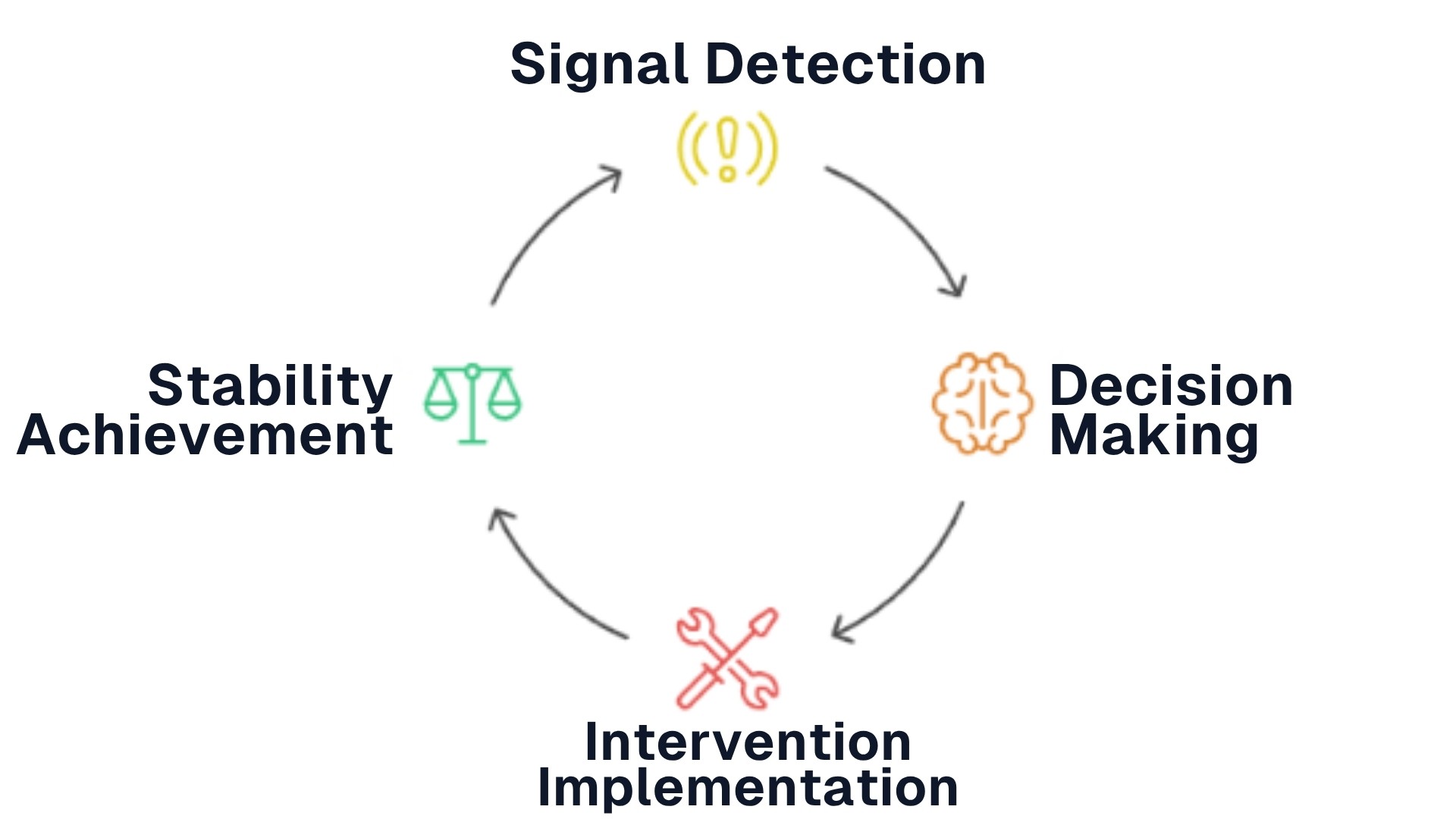
When signal is early, interventions get smaller and more humane.
Instead of:
a reorg after the miss,
a retention scramble after the exit,
a “reset” after trust breaks,
…leaders can do Monday-morning corrections:
clarify what changed and why,
tighten decision boundaries,
remove one recurring blocker,
name tradeoffs out loud,
close the loop on an unresolved tension.
That’s the real ROI of early warning systems: Precision.
Closing
Drift detection is the executive practice of listening for weak signals before they become expensive problems. It’s not a dashboard feature. It’s an operating layer.
Baryons exists to make that layer real: turning the invisible human dynamics that drive performance—alignment, energy, clarity, and strain—into continuous, decision-ready signal, so leaders can intervene earlier and keep execution strong under pressure.
More articles

Why Employees Actually Use It
Employee participation cannot be sustained by organizational need alone. This article examines the value employees look for in a practice such as Baryons. Clarity, agency, constructive contribution, and less avoidable friction and gives sponsors a practical lens for earning trust.

How to Prove Human Performance Is Affecting Operating Results
CFOs and COOs need more than a broad engagement score to understand whether human-performance conditions are affecting execution. This article shows how to connect workforce conditions to observable operating behaviors, local process measures, and decision-ready pilot evidence over 90 days.

Going Deeper: The Thinking Partner and the Growth Partner
Both the Thinking Partner and the Growth Partner grow you. The difference is shape. A look at when to reach for each, and why depth is where the magic lives.
