From Insight Overload to Decisive Action

The enterprise paradox
Most organizations have more insight than ever and less decisiveness than they need.
Dashboards are fuller. AI summaries are faster. Reporting cycles are tighter. But none of that guarantees cleaner action. In many companies, more information has simply made the path to commitment more crowded. That matters now because the pace of change is not slowing. In Deloitte’s 2026 Human Capital Trends research, 85% of leaders said it is critical to build the organization’s and workforce’s ability to adapt at speed, yet only 7% said they are leading in helping their workforce continuously grow and adapt. That gap says something important: the challenge is no longer just intelligence. It is operational follow-through.
At Baryons, this is not viewed as a data shortage. It is viewed as a decision shortage. The brand’s point of view is clear: leaders do not need more noise. They need earlier signal that is credible enough to support action while there is still time to act lightly. Baryons exists to turn invisible human dynamics such as alignment, clarity, confidence, and strain into a continuous, decision-ready signal for leaders.
Why more insight can still produce slower decisions
Most enterprise systems are built to inform. Fewer are built to help leaders commit.
A dashboard can describe what happened. A survey can summarize sentiment. An analytics layer can detect patterns. But the slowdown happens in the space between seeing and deciding. That is where organizations begin to stall. Meetings expand. Caveats multiply. Ownership stays fuzzy. Teams keep discussing what is already visible because the real issue is not understanding. It is committing.
Microsoft’s 2025 Work Trend Index captures that pressure well. The company’s annual report describes the rise of the “Frontier Firm,” a model built around on-demand intelligence and human-agent teams, and says 82% of leaders see this as a pivotal year to rethink strategy and operations. It also reports that 81% expect agents to be moderately or extensively integrated into their AI strategy within 12 to 18 months. When that kind of operational redesign is underway, hesitation becomes expensive. (Microsoft Work Trend Index 2025)
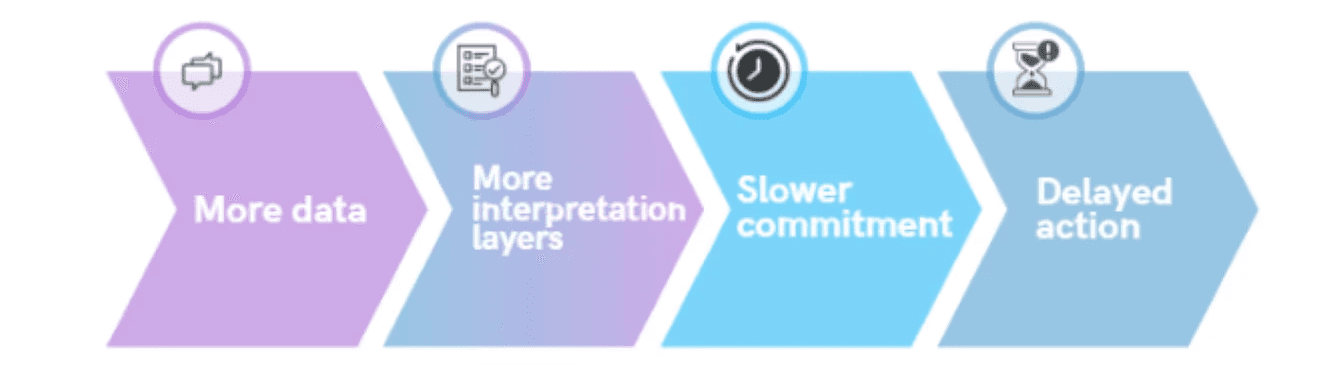
What insight overload looks like in practice
The symptoms are usually easy to recognize, even if they are rarely named clearly.
Sometimes delay presents itself as rigor. A team asks for one more cut of the analysis before moving. Sometimes reversal presents itself as responsiveness. A decision gets reopened because confidence was never built in the first place. Sometimes debate presents itself as alignment. The meeting continues because nobody has named the decider, the threshold for action, or the tradeoff the organization is actually willing to accept.
This is why we define alignment differently. Alignment with Baryons is not agreement, consensus, or compliance. It is decision clarity that survives layers, time, and change. People know what matters most, why it matters, and where they have discretion to act. That is a much stronger operating condition than simply having access to more information.
Clarity matters more than completeness
Leaders are often taught to wait until the picture is complete. That instinct can become a liability.
In fast-moving environments, completeness often arrives too late to be useful. The better standard is whether the organization has enough clarity to move coherently now. Deloitte’s 2026 research repeatedly emphasizes adaptability, trust, and work redesign as the real competitive edge in this next phase of change. The winners are not the organizations with the most analysis. They are the ones that can convert emerging signal into cleaner decisions while uncertainty is still present. (Deloitte 2026 Human Capital Trends)
A useful internal test is simple. Can the leadership team answer, without drift or debate, what exactly is being decided, who owns the call, what level of confidence is enough, and what changes next because of that decision? If those answers are still vague, the company does not have a decision. It has analysis in motion.
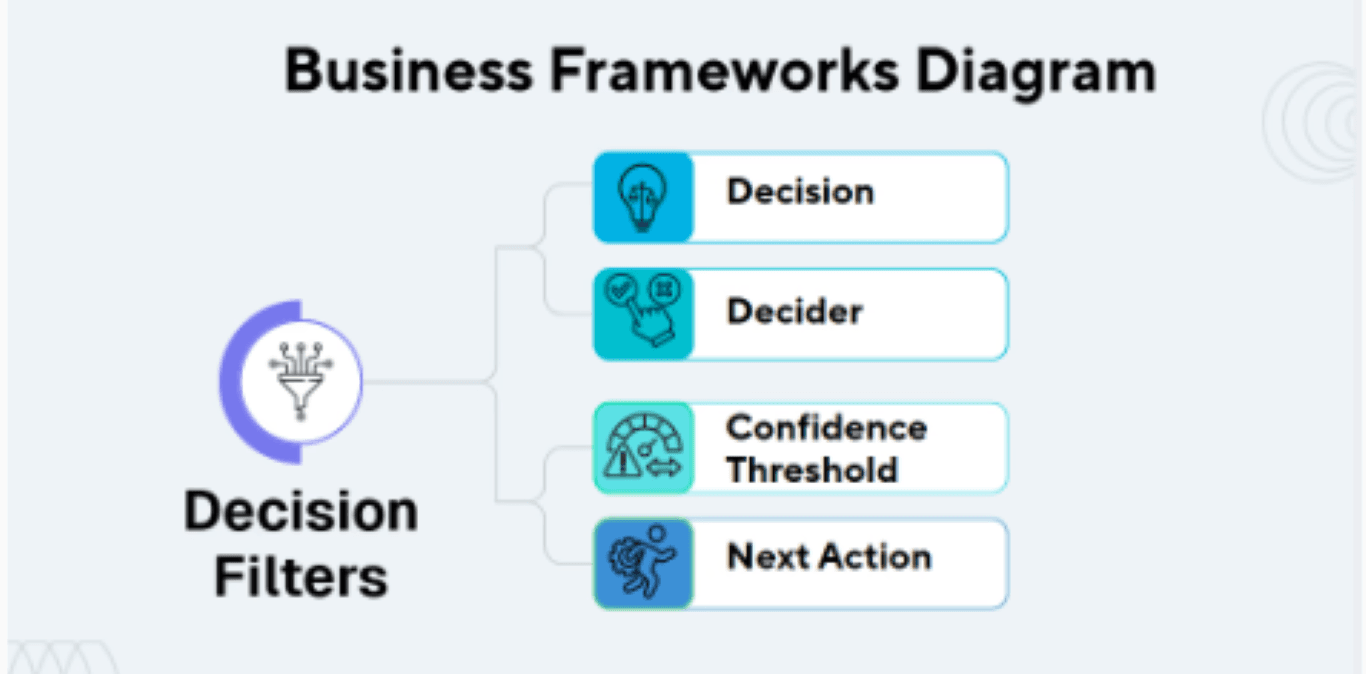
Trust in signal is part of the problem
The problem is not only volume. It is credibility.
When leaders do not trust the signal, they default to anecdotes. When employees do not trust how signal will be used, they sanitize what they share. That is how reporting becomes theater. The company still has dashboards, but it has less truth. Gallup’s April 2026 workplace reporting is a reminder that those human conditions matter commercially: global employee engagement declined for a second straight year, and manager engagement dropped as well. When the manager layer weakens, the quality of translation between leadership intent and operational reality weakens with it. (Gallup employee engagement updates)
That is exactly where Baryons is designed to fit. Rather than adding another retrospective reporting surface, Baryons creates a low-friction signal layer that helps leaders see earlier patterns in clarity, alignment, confidence, and strain. The goal is more usable truth.
From signal to commitment
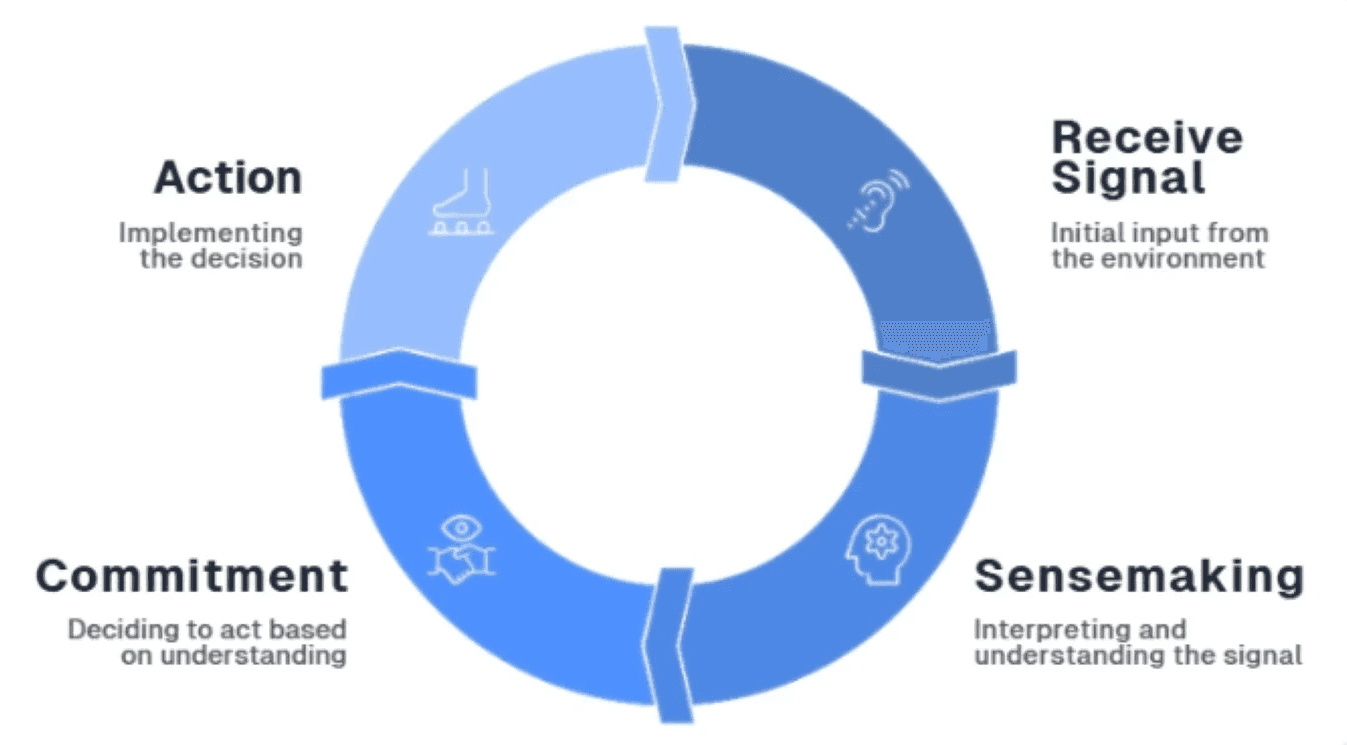
The organizations that handle complexity well do one thing better than others: they shorten the distance between signal and action.
That usually does not require more information. It requires more discipline. Discussion has to be separated from decision. Patterns have to be translated into next actions, not just next reviews. Ownership has to be explicit before momentum leaks away. Misalignment has to be treated as a design problem rather than a motivation problem.
This logic runs directly through the Baryons model. The platform’s daily voice-based practice helps individuals prepare, reflect, and grow in the flow of work, while leadership receives aggregated snapshots that surface patterns in team health and execution risk. That shortens the time between weak signal and usable action.
Final thought
The next advantage will not come from having more insight than everyone else. That edge is disappearing quickly.
The advantage will come from building a leadership system that can trust earlier signal, make clearer decisions, and act before friction becomes cost. That is the real move from insight overload to decisive action.
For organizations trying to create that shift, Baryons offers a practical starting point: a human performance layer that helps leaders see what is changing beneath the surface, so decisions can happen with more clarity and less delay. If that is a challenge your team is feeling, it may be worth exploring what earlier signal would make possible.
More articles

Going Deeper: The Thinking Partner and the Growth Partner
Both the Thinking Partner and the Growth Partner grow you. The difference is shape. A look at when to reach for each, and why depth is where the magic lives.

Why This Isn’t a Pulse Survey
Baryons is not another employee pulse survey. This blog explains the difference between periodic listening and longitudinal organizational signal, showing how Baryons helps CHROs and People leaders understand what changes between survey moments: clarity, momentum, alignment, strain, and emerging patterns that may matter before they become obvious symptoms.
The Privacy Mesh
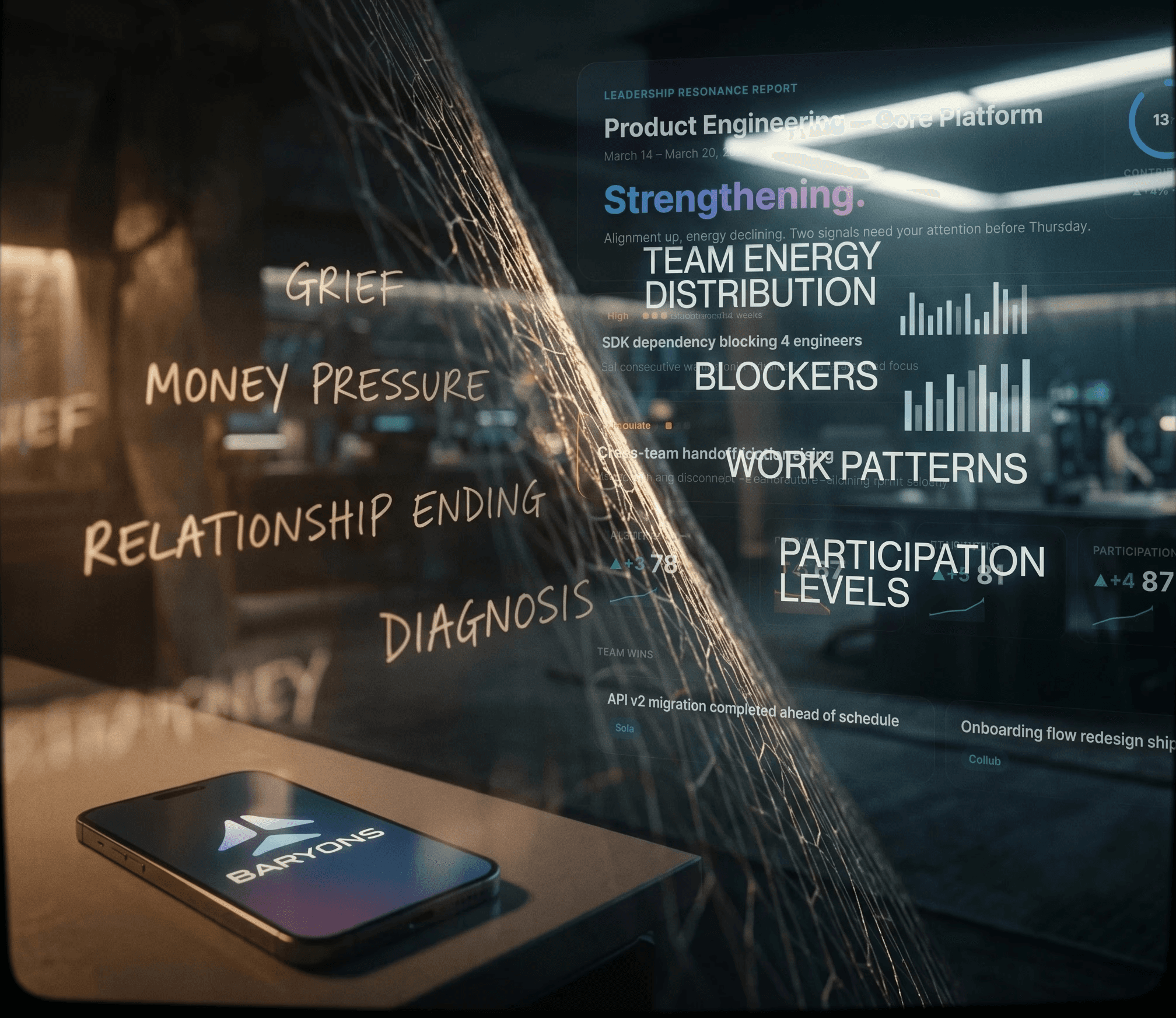
People tell their Baryon real things in an organizational context. The Privacy Mesh is how they can, while their leadership still sees a team's energy and never the contents of a life. Here is how that boundary actually holds.