Did You Know? Pressure Changes the Way You Decide.

When the day gets loud, people lean harder on habit and reach for bigger risks, while the careful, deliberate part of judgment quietly steps back.
For fifty years, researchers have shown that judgment under uncertainty runs on mental shortcuts. Tversky and Kahneman mapped the predictable errors those shortcuts produce. More recent work goes one step further. A large meta-analysis by Starcke and Brand found that stress does not simply make decisions worse. It shifts the strategy itself, pushing people toward quick, reward-seeking choices and away from slower, more deliberate reasoning.
The same body of research points to what holds judgment steady. Decision quality stays high when people keep situation awareness, a clear read of what is happening, what it means, and where it is heading (Endsley). It also rests on calibrated experience. Klein showed that seasoned decision-makers under time pressure rely on pattern recognition built from real feedback, not on weighing every option from scratch.
The honest takeaway is you cannot remove pressure from a real job. You can protect the conditions that keep your decisions sharp.
Where Baryons Comes In
This is where a daily thinking partner earns its place.
A Morning Check-In sets your focus before the world rushes in, so the first decisions of the day come from a clear head rather than a crowded one. When something hard lands, the Thinking Partner gives you a place to talk it through out loud. Saying a decision aloud slows the snap judgment and brings the whole picture back into view.
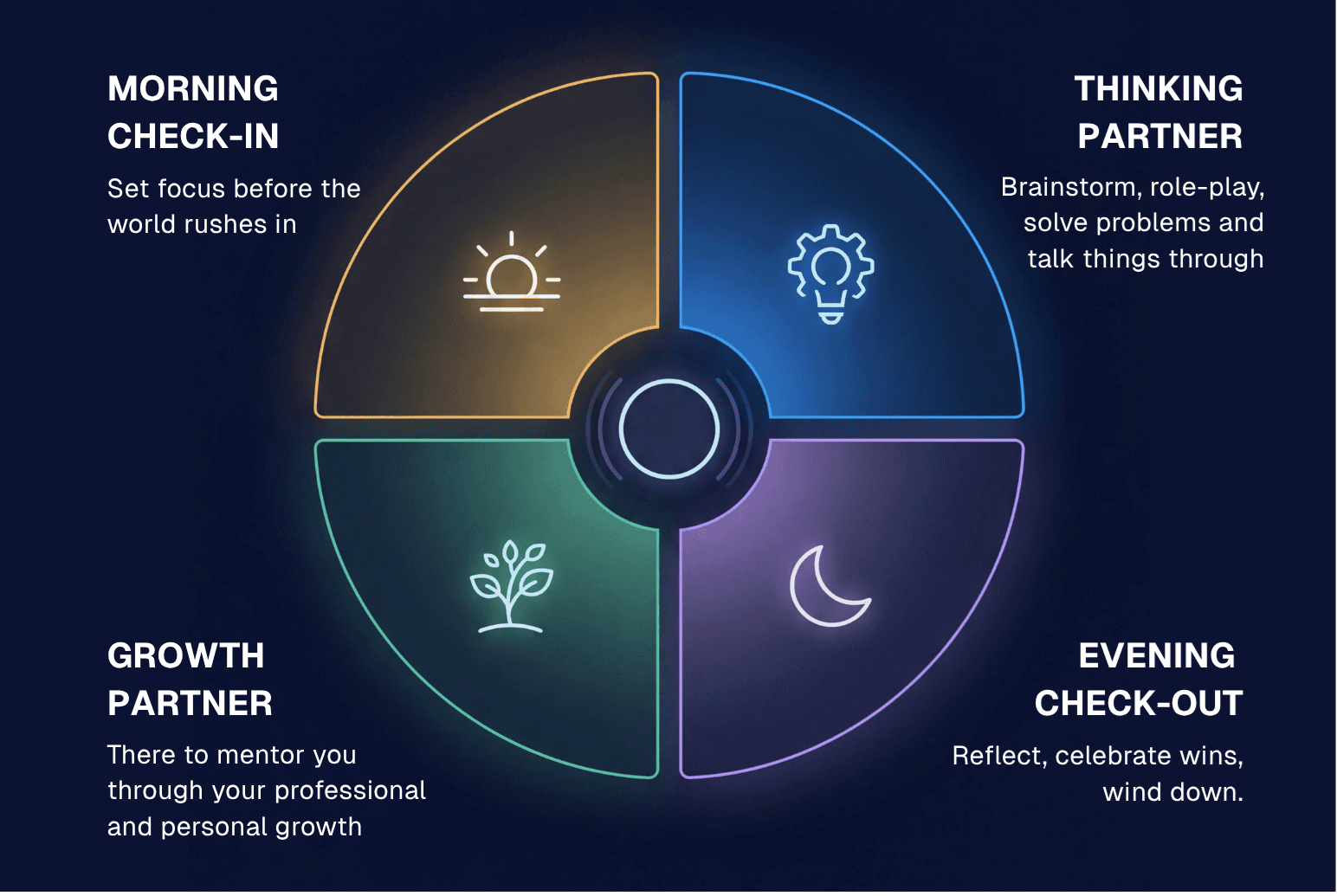
And because Baryons remembers, the shape of your own decisions becomes visible over time. Your judgment compounds instead of resetting every morning. That is the calibrated experience the research keeps pointing to, built one conversation at a time.
For Leaders: The Same Science, One Altitude Up
Pressure shifts how teams decide, not just individuals. When a group is under strain, the early signs show up in energy and friction well before they show up in a missed deadline. The trouble is that leaders rarely have a clear read of those signals in the moment, so the call about where to step in gets made late, under the same pressure that clouds it.
The Team Resonance Insights gives leaders situation awareness at the team level. Each week it sorts what is happening into Act, Watch, and Amplify, so the choice of where to put your attention comes from a clear picture rather than a reactive one. The personal stays personal. Leaders see the patterns, never the transcripts.
That is signal before symptom. It is also better judgment applied to the hardest calls a leader makes every week: where to lean in, where to wait, and where to celebrate.
The aim is simple. Decide from a clearer place, more often.
Decisions get sharper. That is the whole point.
Interested in getting Baryons for your team, Book a demo!
This is the first in a short series on the six ways a thinking partner changes how people and organizations work. Next up: how shared reality keeps teams aligned without launching another survey.
Curious what a clearer week feels like? You can start free.
Learn more on how Baryons works here. Or watch this video.
Sources:
Starcke & Brand (2016) - Effects of Stress on Decisions Under Uncertainty: A Meta-Analysis
Klein (2008) - Naturalistic Decision Making. Human Factors
Endsley (1995) - Toward a theory of situation awareness in dynamic systems. Human Factors
Tversky & Kahneman (1974) - Judgment Under Uncertainty: Heuristics and Biases
More articles

Going Deeper: The Thinking Partner and the Growth Partner
Both the Thinking Partner and the Growth Partner grow you. The difference is shape. A look at when to reach for each, and why depth is where the magic lives.

Why This Isn’t a Pulse Survey
Baryons is not another employee pulse survey. This blog explains the difference between periodic listening and longitudinal organizational signal, showing how Baryons helps CHROs and People leaders understand what changes between survey moments: clarity, momentum, alignment, strain, and emerging patterns that may matter before they become obvious symptoms.
The Privacy Mesh
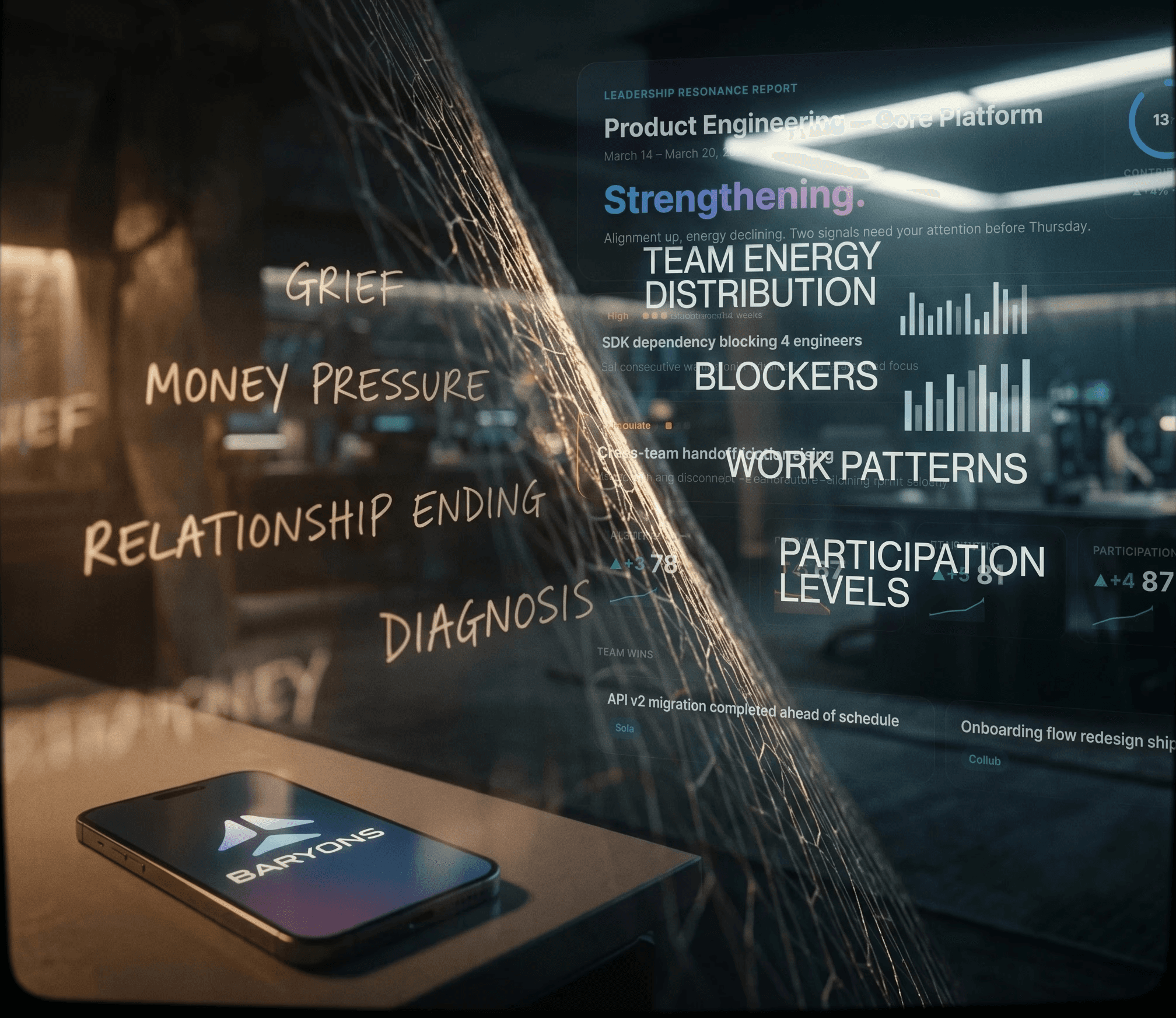
People tell their Baryon real things in an organizational context. The Privacy Mesh is how they can, while their leadership still sees a team's energy and never the contents of a life. Here is how that boundary actually holds.