Execution Friction and “Busy But Not Aligned”

When “Busy” Becomes a Symptom: The Hidden Mechanics of Execution Friction
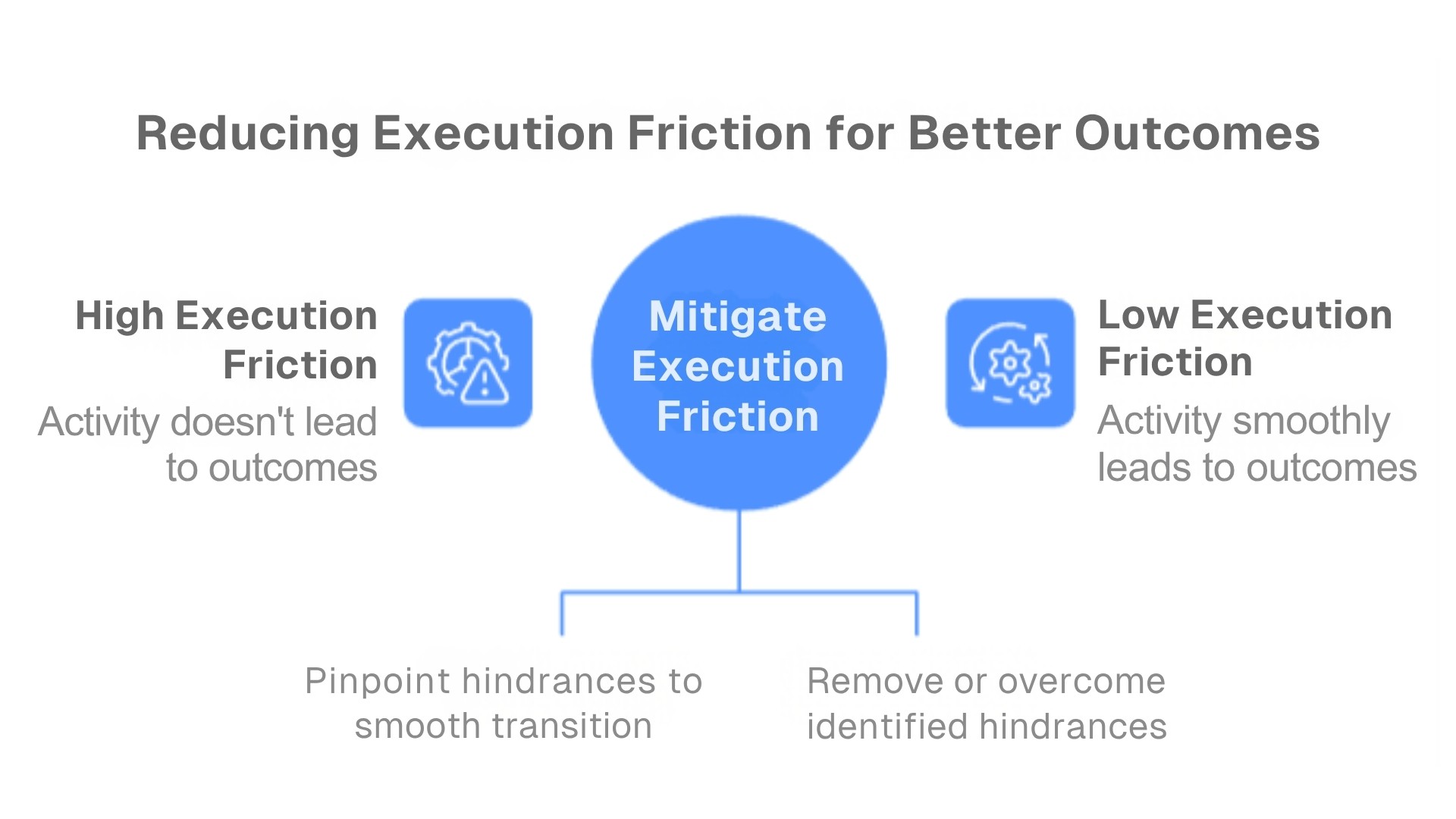
Most leadership teams need an explanation for a very specific, very modern feeling: everyone is working hard, calendars are packed, yet progress doesn’t match the effort.
That gap, between activity and outcomes, isn’t usually a talent issue. It’s execution friction. And friction is sneaky because it doesn’t announce itself as a problem. It shows up as “small” things: more Slack threads to resolve one decision, more rework after “alignment” meetings, more handoffs that feel like dropped balls, more time spent clarifying what someone meant instead of building what they meant.
When leaders look at dashboards, they see lagging indicators. Delivery slips. Escalations rise. Attrition ticks up. And then the org responds the way it always has: add a meeting, add a status update, add a process. That’s how teams become busy but not aligned.
Alignment Isn’t Consensus. It’s Shared Decision Clarity.
One reason execution friction is so persistent is that we’ve diluted the word alignment. “We’re aligned” can mean anything from “we all nodded” to “we attended the meeting” to “we don’t want conflict.”
Real alignment is operational. It’s the shared clarity that lets decisions travel cleanly through the organization without being re-litigated every time they cross a team boundary. It’s why two different teams can work autonomously and still build toward the same outcomes without constant synchronization rituals.
When alignment is missing, coordination costs rise fast:
Decisions get made, but not absorbed.
Priorities get announced, but not translated.
Ownership exists on paper, but not in practice.
Dependencies aren’t visible until they’re already blocking.
In that environment, “busyness” is a coping mechanism. People fill the gaps with more communication, more documentation, more updates, because they can feel the system wobbling, and they’re trying to stabilize it manually.
The Coordination Tax: Where Time and Morale Quietly Leak
Execution friction creates what many operators recognize immediately: the coordination tax. It’s the extra work that exists only because the system doesn’t move information, decisions, and accountability cleanly.
It’s the “quick” meeting that becomes a recurring meeting.
It’s the status document that becomes a second job.
It’s the handoff that requires three clarifying calls.
It’s the project that ships twice, fix what got missed the first time.
The coordination tax doesn’t just slow delivery. It changes how people feel at work. High performers start spending their cognitive energy on navigation instead of creation. Managers spend their energy on translation instead of leadership. Teams become more reactive, because they’re always recovering from the last confusion.
And the scariest part is that leaders often don’t see it until it’s expensive because the organization looks active.
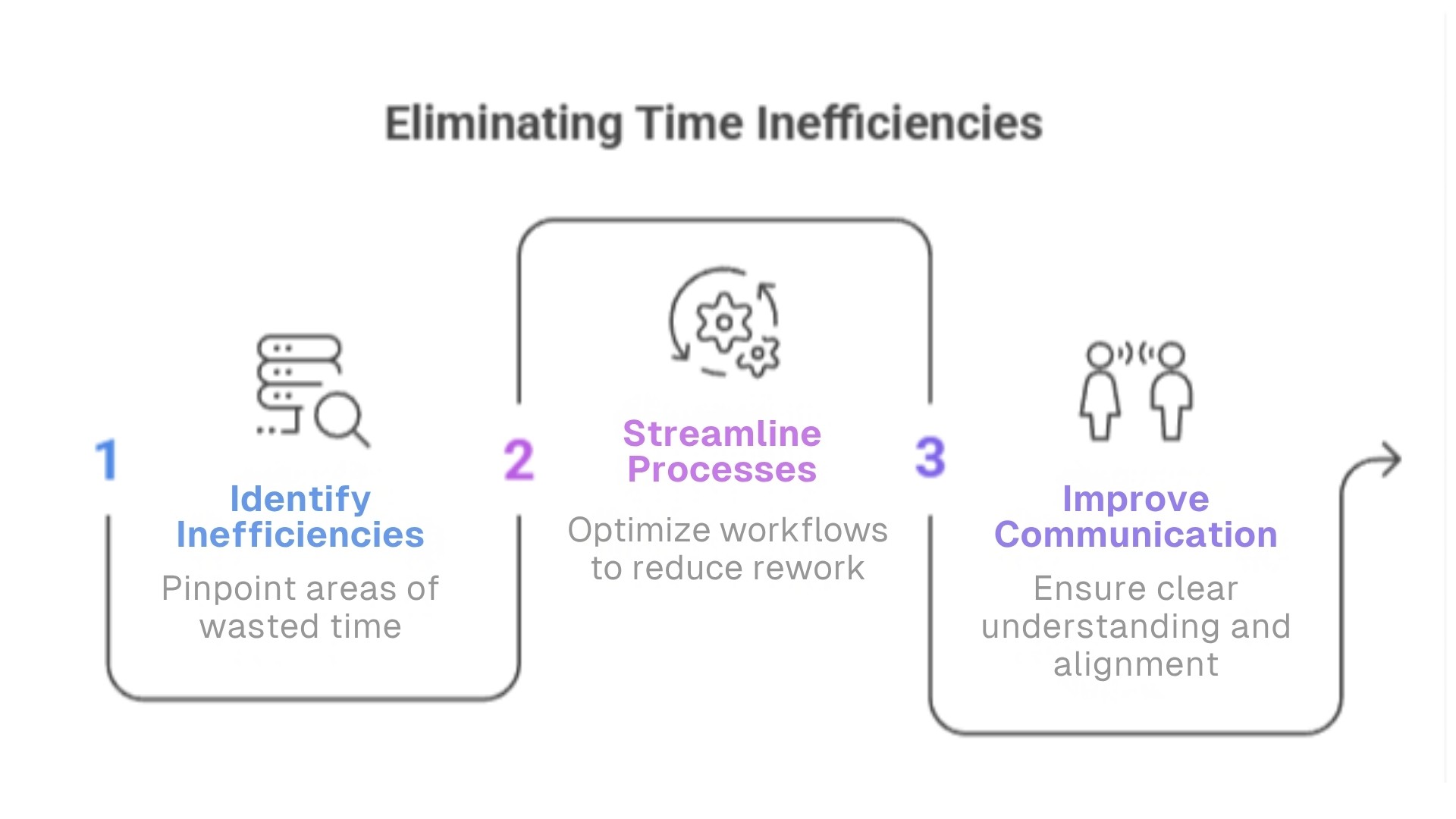
How Execution Friction Compounds
Execution friction is compounding interest on small misalignments.
A team interprets a priority differently.
A manager hesitates to raise a concern.
A decision lands ambiguously.
A dependency goes unspoken.
A “temporary workaround” becomes policy.
Over time, those micro-frictions form a pattern. The organization becomes less responsive under pressure, precisely when it needs to move faster. Leaders push harder. Teams work longer. The system gets noisier. And outcomes still lag.
This is why “work harder” never fixes execution friction. It just increases strain inside a system that is already leaking clarity.
What High-Performing Organizations Instrument
The strongest operators manage output and signal.
They want to know, early. When execution is becoming brittle. Not when the quarter closes. Not when a customer escalates. Not when a key person quits. Early enough to intervene lightly.
That requires visibility into the human layer of execution:
Where are priorities becoming unclear?
Where is workload strain rising?
Where are teams feeling stuck, but not surfacing it?
Where is confidence dropping before performance drops?
Most organizations attempt to capture this with surveys or meetings. But surveys are episodic and often too blunt. Meetings are expensive and often political. What leaders need is a continuous, low-friction signal of how work is actually being experienced and coordinated before the outcomes break.
Replacing “More Process” With Better Signal
The goal isn’t to eliminate all friction, some friction is healthy, it’s how organizations think, debate, and refine. The problem is invisible friction: the kind that taxes execution without creating better decisions.
If you want to reduce invisible friction, you don’t start by redesigning everything. You start by making the system legible again.
A few practical questions that expose where the coordination tax is building:
Where do decisions repeatedly get revisited?
If teams keep reopening “settled” calls, clarity didn’t land.
Where does rework show up most often?
Rework is often a symptom of unclear constraints, not poor effort.
Where do managers spend the most translation time?
Translation is a cost. It’s also a signal: the system isn’t carrying meaning on its own.
Where are people overloaded but quiet?
Silence under strain is one of the most predictive early warning signs.
When leaders can see these patterns early, the interventions get smaller. A single clarified decision boundary can remove weeks of churn. A reframed priority can prevent a cascade of rework. A surfaced blocker can stop the slow drift into firefighting.
The New Advantage: Low-Friction Reflection at Scale
There’s a reason Baryons leads with “brief calls, big clarity.” When the system is already noisy, the last thing teams need is another heavy ritual.
A voice-based, low-friction reflection habit creates a different dynamic: it meets people where the real work happens, between meetings, after calls, during the moments when friction is felt but not yet named. Over time, those reflections become aggregated signal: patterns of clarity, strain, alignment, and execution risk without singling anyone out.
That’s how “busy but not aligned” becomes measurable, steerable, and fixable. Not by piling on process. By restoring signal.
If your organization feels busy but outcomes aren’t matching effort, that’s not a motivation problem, it's usually a signal problem. If you want to see how Baryons turns day-to-day friction into decision-ready clarity (through brief, voice-based check-ins and leader-friendly insights), visit our page and learn how it works.
More articles

Why Strategy Breaks as It Is Retold Across the Organization
Strategy often changes shape as leaders interpret and communicate it through multiple layers and functions. This article explains translation drift as a source of execution friction and offers a practical way for CEOs and COOs to surface divergence before it becomes a lagging business symptom.

The Last Five Minutes of Your Workday Might Matter Most
A short end-of-day reflection can help you switch off and learn from your day. Here’s what the research says, and how the Baryons Evening Check-Out helps.

The Handoff Problem: Why Execution Loses Context Between Teams
Execution friction is often blamed on effort, but it frequently begins when context, priorities, and decision boundaries weaken as work moves between teams. This article gives COOs and cross-functional leaders a practical way to improve translation quality and preserve strategic intent through the handoff.
