Accountability That Doesn't Create Fear

Accountability has an image problem.
In too many organizations, it’s synonymous with pressure, exposure, and consequences. When leaders say, “We need more accountability,” what teams often hear is: “We’re about to tighten control.”
The tragedy is that fear-based accountability doesn’t produce ownership, it produces risk management. People become careful instead of candid. They focus on defensibility instead of truth. They hide uncertainty, soften bad news, and escalate late. On paper, everything looks fine. In reality, the system is losing honesty.
Real accountability is a condition where people can name reality early, before problems become expensive and where ownership is clear enough that momentum doesn’t depend on heroic effort.
Why Fear Shows Up in “Accountability Cultures”
Fear usually doesn’t come from one bad manager. It comes from a predictable system pattern:
Metrics are used as judgment, not learning.
Mistakes are punished more than they’re examined.
Accountability conversations happen only when something goes wrong.
Leaders ask for candor but reward certainty.
Over time, teams learn the safest behavior is silence. Or performative confidence. Or “I’ll handle it” even when they can’t.
That’s not a people flaw. It’s a system incentive. It creates a leadership paradox: the more leaders demand accountability through pressure, the less signal they receive about what’s actually happening.
Accountability Is a Signal Problem Before It’s a Performance Problem
Most accountability breakdowns are not about people refusing to own work. They’re about people not knowing what “owning” means in a changing environment.
When priorities shift weekly, ownership becomes ambiguous.
When decisions aren’t explicit, accountability becomes political.
When teams are overloaded, accountability becomes survival.
So leaders try to solve the problem socially: “be more accountable.” But accountability is an operating condition created by clarity, trust, and consistent feedback loops.
If you want accountability without fear, start here… Make it safe to tell the truth early.
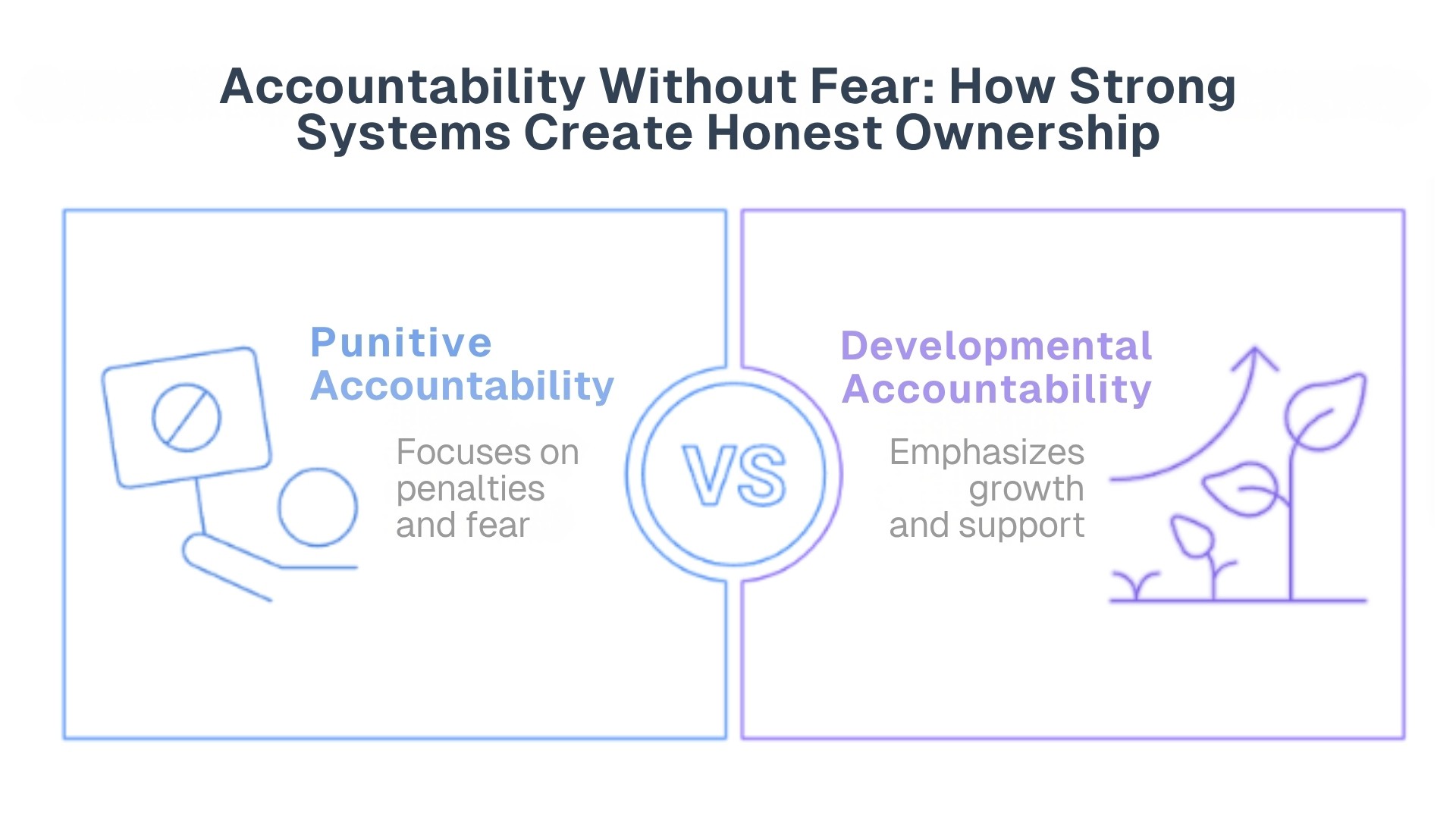
The Two Types of Accountability
There’s a quiet distinction that matters:
Punitive accountability says: “Who did this?”
Developmental accountability says: “What is this telling us, and what do we do next?”
Punitive accountability drives concealment. Developmental accountability drives ownership because it treats signal as valuable, not dangerous.
In high-performing systems, accountability is less about blame and more about learning speed. The fastest learning organizations surface reality early, interpret it quickly, and respond with small corrections instead of late-stage heroics.
That requires psychological safety, yes, as execution infrastructure.
Building Accountability as Infrastructure
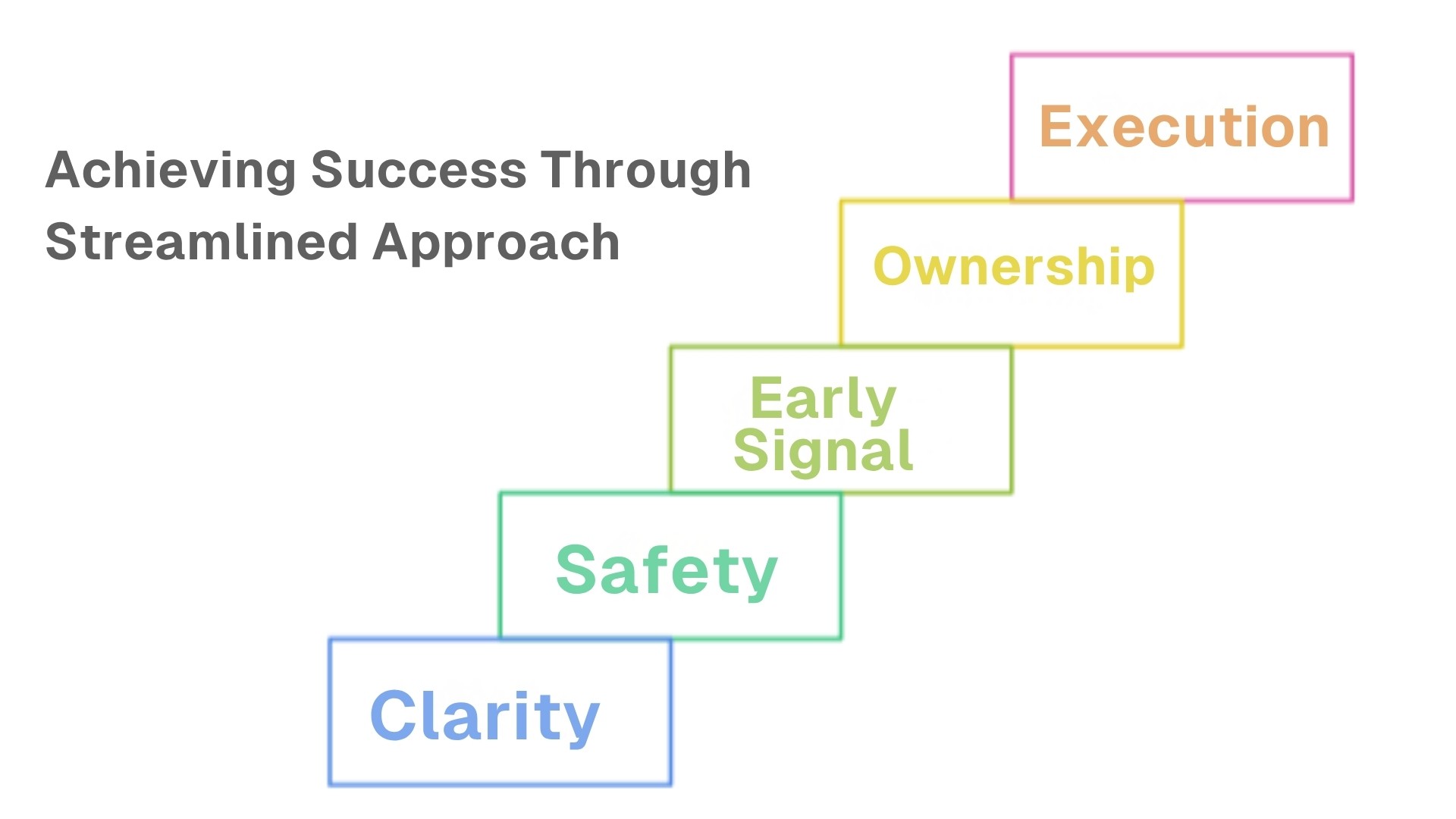
If you want accountability to feel constructive, you need repeatable structures that make honesty normal.
Clear decision boundaries
People can’t own outcomes if they can’t see where decisions live. Who decides what? What’s the escalation path? What is a local decision vs a cross-functional decision?
Explicit “what good looks like”
Ambiguity creates fear because people don’t know what they’re being evaluated against. Clarity reduces anxiety and increases ownership.
Short feedback loops
Annual reviews are too late. Quarterly reviews are often too slow. Accountability thrives on lightweight, frequent reflection that keeps reality close to the surface.
Leader behavior that rewards early truth
The fastest way to kill accountability is to punish the messenger. The fastest way to build it is to reward early honesty, even when the news is inconvenient.
Why Leaders Don’t Get the Signal They Need
A common pattern: leaders are surprised by problems that were obvious to the team weeks earlier.
That happens when people experience “truth-telling” as risky. They may not even consciously hide it. They just delay. They wait for more certainty. They hope it resolves. They soften the message. And by the time it hits leadership, it’s no longer a small fix.
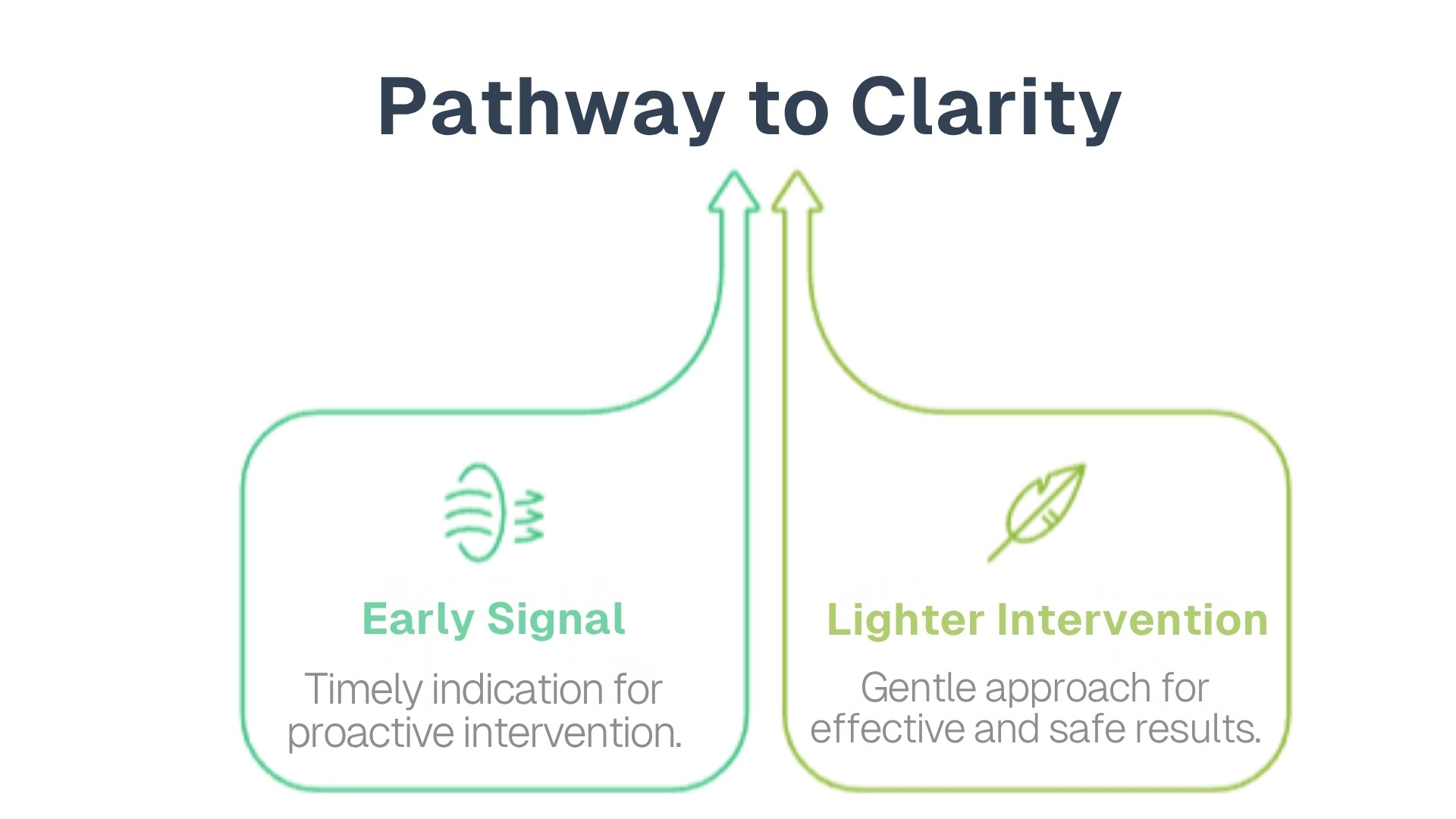
If leaders had a continuous, trustworthy signal of how work is being experienced, where strain is rising, where clarity is decaying, where friction is building they could intervene earlier, with less force.
That’s how accountability becomes lighter.
A Practical Reframe: “Earlier, Not Harder”
Accountability doesn’t need to be louder, it needs to be earlier.
Instead of asking “Why didn’t you deliver?” ask:
“What did you see early that we missed?”
“What became unclear?”
“Where did coordination break down?”
“What support would have made the difference?”
Those questions move the system from judgment to learning. They also teach teams that raising signal is valued.
Over time, people stop hiding reality because they no longer associate it with punishment. That’s what accountability without fear feels like: an environment where honesty is efficient.
Where Baryons Fits in an Accountability System
Baryons is built around a simple insight: reflection is how humans create clarity. But reflection often disappears under pressure, exactly when it’s needed most.
A low-friction, voice-based practice gives people a way to process reality in real time. And when that reality is aggregated into patterns for leaders without singling anyone out, it becomes an accountability accelerator: earlier signal, clearer interventions, less fear.
Accountability stops being a threat and becomes a shared operating rhythm.
If you’re trying to raise accountability without raising anxiety, the lever is a better signal and clearer thinking. If you’d like to see how Baryons supports this with brief daily voice check-ins and leader-ready insights that surface patterns early, explore How It Works.
More articles

Why Employees Actually Use It
Employee participation cannot be sustained by organizational need alone. This article examines the value employees look for in a practice such as Baryons. Clarity, agency, constructive contribution, and less avoidable friction and gives sponsors a practical lens for earning trust.

How to Prove Human Performance Is Affecting Operating Results
CFOs and COOs need more than a broad engagement score to understand whether human-performance conditions are affecting execution. This article shows how to connect workforce conditions to observable operating behaviors, local process measures, and decision-ready pilot evidence over 90 days.

Going Deeper: The Thinking Partner and the Growth Partner
Both the Thinking Partner and the Growth Partner grow you. The difference is shape. A look at when to reach for each, and why depth is where the magic lives.
